
Sleeve Gastrectomy
How it works, expected weight loss, the reflux question, and who it suits.
Read about the sleeve →Home/Procedures
Two operations make up the large majority of bariatric surgery today. A third goes further for patients who need it, a fourth addresses problems with a previous operation, and a fifth — the adjustable gastric band — has largely been left behind but still affects a great many people who have one. Here is how they compare.
Weight loss surgery is not a shortcut and it is not a cure. What it does is change the physiology that makes sustained weight loss so difficult — the hunger signaling, the portion tolerance, and in some operations the way calories are absorbed. It gives a committed patient a tool that diet and exercise alone rarely provide.
It also asks something of you permanently: changed eating patterns, lifelong follow-up, and in most cases lifelong vitamin supplementation. Patients who do well are the ones who understood that going in.
There is no single best operation. A surgeon who recommends the same procedure to everyone is not evaluating anyone. The right choice depends on your BMI, your diabetes status, your reflux history, prior abdominal surgery, medications you take, and what you are realistically prepared to do afterward.
Figures below are typical ranges reported in the surgical literature. Your own results depend on your starting point, your health, and your follow-through.
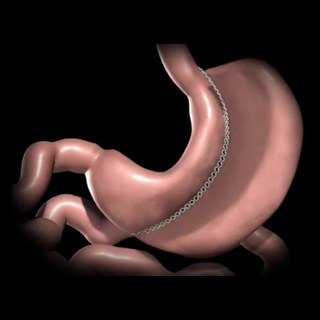 Sleeve Gastrectomy
|
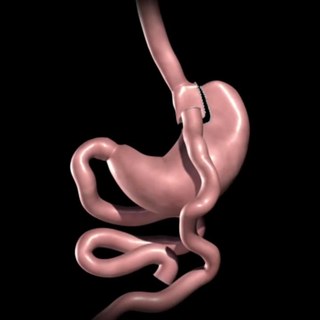 Roux-en-Y Gastric Bypass
|
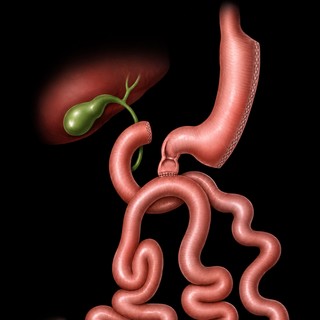 SADI-Snewer; coverage varies
|
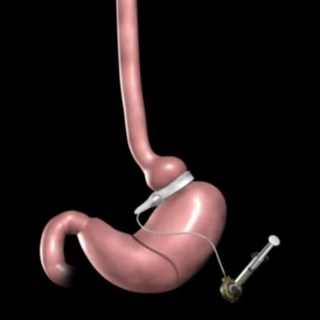 Adjustable Gastric Bandrarely performed today
|
 Revision / Conversion
|
|
|---|---|---|---|---|---|
| What is changed | About 80% of the stomach is removed, leaving a narrow vertical tube. Intestines are untouched. | A small stomach pouch is created and connected directly to the small intestine, bypassing most of the stomach and the first section of intestine. | A sleeve gastrectomy, plus the duodenum divided just past the pylorus and joined to a loop of ileum. One intestinal connection; the pyloric valve is kept. | An inflatable silicone band is placed around the top of the stomach, creating a small pouch above it. Tubing runs to a port under the skin, filled or emptied with saline to tighten or loosen the band. Nothing is cut, stapled, or removed. | Depends on the original operation — commonly a sleeve converted to a bypass, or a gastric band removed with or without a new procedure. |
| How it works | Restricts volume and lowers hunger hormone production. | Restricts volume, alters gut hormone signaling, and adds a degree of malabsorption. | Restriction, substantial malabsorption, and hormonal change together. Keeping the pylorus means the stomach still empties at its own pace. | Mechanical restriction only. No change to hunger hormones and no malabsorption — which is why it depends so heavily on the patient's own behavior. | Corrects an anatomic problem, treats a complication, or adds a mechanism the first operation lacked. |
| Typical weight loss | Roughly 25–30% of total body weight in the first 1–2 years. | Roughly 30–35% of total body weight in the first 1–2 years. | The greatest of these operations. Roughly 35–40% of total body weight in the first 1–2 years, with published series reporting about 38% still at five years. | The lowest of the group. Perhaps 15–20% of total body weight at best, and long-term averages fall well below that as bands are loosened, fail, or come out. | Highly variable. Revisions generally produce less loss than a first-time operation. |
| Type 2 diabetes | Substantial improvement in many patients. | The strongest and most durable published results of the common operations. | Remission reported from roughly 60% to 86% depending on the series — alongside or ahead of the bypass. | The weakest effect of the four. Improvement tracks weight loss alone, with no independent hormonal benefit. | Depends entirely on the conversion performed. |
| Acid reflux | Can worsen reflux, and sometimes causes it. A significant consideration if you already have GERD. | Usually improves reflux. Often the preferred operation when GERD is present. | May persist or worsen, because of the sleeve component. Significant GERD usually points to a bypass instead. | Frequently causes or worsens reflux, and can lead to dilation of the esophagus over time. | Reflux after a sleeve is one of the most common reasons for conversion to a bypass. |
| Nutrition afterward | Lifelong multivitamin, B12, and other supplements as directed. Generally simpler than bypass. | Lifelong multivitamin, B12, iron, calcium, and vitamin D, with regular lab monitoring. Non-negotiable. | The most demanding by a distance. Lifelong fat-soluble vitamins A, D, E and K on top of the usual, with regular labs. Protein malnutrition is a real risk. | The least demanding. No malabsorption; a general multivitamin is usually enough. | At least as demanding as the operation you end up with. |
| Reversible? | No. Removed stomach cannot be restored. | Technically reversible, but reversal is a major operation and is uncommon. | Not in any practical sense. | Yes — the band comes out and the stomach is largely unaltered. This remains its one clear advantage. | Varies. |
| Main specific risks | Staple line leak, bleeding, narrowing of the sleeve, new or worsened reflux. | Leak, marginal ulcer, internal hernia and bowel obstruction, dumping syndrome, vitamin deficiency if supplements are skipped. | Leak, fat-soluble vitamin deficiency, protein malnutrition, loose fatty stools. Less long-term data than sleeve or bypass. | Slippage, erosion into the stomach wall, pouch and esophageal dilation, port infection or flipping, tubing leaks. Reoperation rates over ten years are high. | Higher complication rates than first-time surgery because of scar tissue and altered anatomy. Surgeon experience matters most here. |
| See it | Watch the animation → | Watch the animation → | See the diagram → | Watch the animation → | See the sleeve or bypass animation, depending on the conversion |
| Read more | Sleeve gastrectomy → | Gastric bypass → | SADI-S → | Gastric band → | Revision surgery → |
Swipe the table sideways to see all four columns.
All of these operations carry risks common to any abdominal surgery, including bleeding, infection, blood clots, and anesthesia complications. Serious complications are uncommon but real, and they will be discussed in detail at your consultation.
In 2022, the American Society for Metabolic and Bariatric Surgery and the International Federation for the Surgery of Obesity jointly updated the eligibility guidelines that had stood since 1991. Under the current guidance, surgery is considered appropriate for:
Insurance criteria have not all caught up. Many plans still apply the older 1991 standard — BMI of 40, or 35 with a qualifying condition — and most require a documented supervised weight loss period before they will approve surgery. What you medically qualify for and what your policy will pay for are two different questions, and we work through both with you.
Weight loss medication is a legitimate treatment in its own right, and this practice runs a full medical weight loss program alongside the surgical one — prescription medication, nutrition counseling, and structured follow-up. It works as a standalone treatment, before surgery, after surgery, or for weight regain years later.
Because both are offered here, the two can be weighed against each other honestly, by someone with no reason to steer you toward either.
Go deeper
How it works, expected weight loss, the reflux question, and who it suits.
Read about the sleeve →The strongest results for type 2 diabetes and for reflux, and the lifelong nutrition it requires.
Read about the bypass →The greatest weight loss and the strongest diabetes results of these operations, and the most demanding nutritional follow-up.
Read about SADI-S →Once a third of all bariatric surgery, now under one percent. What the results really looked like, and what to do if you still have one — with the national trend data behind it.
Read about the band →Weight regain, reflux after a sleeve, or an old band causing trouble — and the options for fixing it.
Read about revisions →That is exactly what the consultation is for. A full hour, one-on-one with Dr. Geller, going through the options against your own medical history.